The Design Behind AnimeScape Tokyo Tours
On this page, I’d like to introduce myself—the tour designer and primary guide behind AnimeScape Tokyo Tours.
I first came up with the concept of AnimeScape—and realized it could become a completely new way to explore Tokyo (and Japan)—when I returned to Japan after living in Texas for about a year and a half. I was wandering through Tokyo, looking for a new place to live, when the idea clicked.
But the real beginning goes further back: I spent nine years working for Japan’s space program, and after completing a major Earth-observation satellite development project, I changed careers to join an animation studio—another dream I’d carried since childhood.
The Anime I Couldn’t Watch
When I was in elementary school, there was an anime people called a “social phenomenon.” At the time, I lived far, far away from Tokyo in the countryside, and in that place and that era, anime was treated as something “creepy,” stamped with a strongly negative label.
So even if it was a nationwide phenomenon, if my classmates found out I was watching it, it would mean severe bullying for the rest of elementary school and into middle school. I’d be attacked at home, too—by family.
I couldn’t watch the TV broadcast. But a close relative who went to school in a city secretly recorded it on VHS and lent it to me. Those 26 episodes—and then watching the two theatrical films that were released the following year, in theaters, in real time—had a decisive, foundational impact on who I became.
Nine years after those films, the director behind that title founded a new studio, serving as both CEO and director, and began rebuilding the same title in a new form. The original was not only a masterpiece that goes beyond the history of Japanese anime—it belongs in the history of world cinema—and it was bound up with the most important memories of my teenage years. So at first, I was strongly negative about the Rebuild.
But when the Rebuild films were actually made, I was captivated. It was announced that the Rebuild would conclude as a four-film series.
Joining the Studio — The Work Behind the “Magic”
Shortly before my Earth-observation satellite project wrapped up, the studio’s website announced that they were recruiting staff to fully begin production on the fourth film—the finale of the Rebuild series.
The first and second Rebuild films had been produced smoothly. The third took more time, and the fourth was struggling to even get moving. So when I saw that announcement, I got excited. It’s finally starting.
Along with that excitement, I was shocked to discover something in myself: I wanted to be part of making it. I’d believed since childhood that animation—especially this director’s work—was something like magic, with no space for an ordinary person like me to touch.
The visual evolution in the third Rebuild film, and later in the live-action film he directed, was astonishing. That only intensified the feeling.
At the same time, as I gained experience on satellite development projects, I started thinking: something that looks like “pure magic” can’t be made by magic alone. There has to be a very concrete, systematic kind of work behind it—and I became deeply curious about what that work actually is.
I’d been carrying that curiosity for years, and it pushed me toward applying. But I had zero filmmaking experience, and I didn’t meet any of the skills or background they were asking for. On top of that, my career in the space program was extremely stable, and it was clear that meaningful, exciting projects would continue for years.
Still—I wanted to work with them and make something together. I wanted to witness, up close, how work like that is actually made. I thought about it obsessively for a full week, and even though I knew applying would probably be pointless, I applied anyway.
I wrote four pages in my application materials: I had no filmmaking experience, but my commitment to that title was stronger than anyone’s. I had the drive. I’ll do anything—seriously. Starting at the lowest pay in the studio was completely fine with me.
A month later, I received an email: Come in for an interview.
I prepared as much as I possibly could and went into three rounds of interviews, promising myself I would answer everything honestly. One of the greatest strokes of luck in my life is that they let me join the studio.
On my first day, the director—my number-one star in the world—bowed to me very politely and said, “I think it’s going to be tough from here on out, but I’m glad to have you with us.”
After that, I spent the busiest—and most fascinating—three and a half years of my life.
Because I was inexperienced and lacked the necessary skills, I started exactly as I’d declared: at the lowest pay in the studio. But I worked with everything I had. Once they recognized that I wasn’t just an otaku tourist looking around, but someone genuinely working for the production, I began earning a proper salary as a real member of the team.
Production finished. The film made it to theaters despite the worst of the pandemic—and became a historic hit. But my mind still couldn’t leave that title behind.
One reason was that I began wanting to preserve the work of the world-class talents who made that film—especially the work that never appears on the surface.
Another reason was that I wanted to record something I’d always wanted to know before I joined the studio, and only truly learned after joining: the “magic” parts of production, and the non-magic parts—the remarkably engineering-like approaches behind making something that looks like magic.
So, nervously, I proposed to the director that I be allowed to compile a record book documenting how the film was planned and executed. He replied instantly: “OK.”
That’s how my next job began. Through writing—again, something I had never done professionally—I entered a second period of the busiest, most fascinating days of my life. It was supposed to be published in one year. It ended up taking two and a half. But in the end, it was commercially published.
With that book, I finally felt I had graduated from that title.
After joining the studio, I had worked for six years with almost no real breaks. So I decided to take a long one. Writing the book left me feeling like I’d poured out everything I’d built as a working adult—completely spent, emptied out. I felt I needed to experience something new, to learn something new.
To do that, I chose to do something I would normally never do: leave Tokyo and live in the suburbs outside Houston, Texas.
Texas, Through an Outsider’s Eye
Life in the U.S. was a shock.
The United States and Japan are physically almost on opposite sides of the planet, separated by the Pacific. Yet because of history—and because American Hollywood, music, and pop culture are simply the most globally dominant—it’s easy for Japanese people to feel that the psychological distance is close. Sometimes it can even feel closer than neighboring countries in East Asia.
But I quickly realized that this was completely one-sided imagination on Japan’s part. Psychologically, the distance was as far as the physical distance. And that was exactly what made it so stimulating—and so interesting.
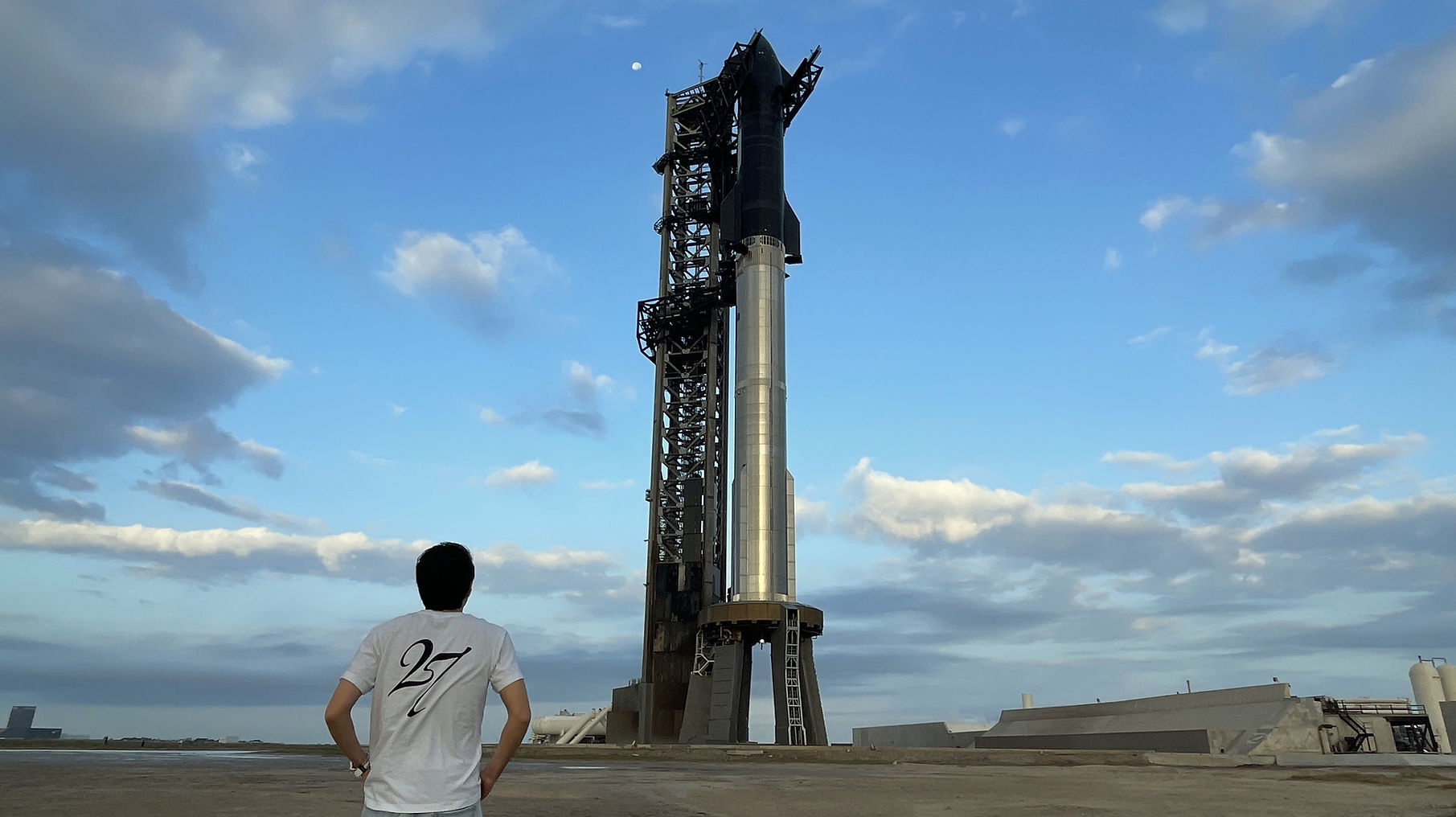
Every time I went to McDonald’s, to HEB (the supermarket), to Raising Cane’s, to Buc-ee’s (the gas station & convenience store), to a shopping mall, to Texas Roadhouse; every time I watched an Astros or Rockets game; every time I went to Space Center Houston (I had an annual pass); every time I drove to Boca Chica to watch a Starship launch; every time I drove on I-45—I never got tired of being surprised by cultural differences. I enjoyed it right up until the day I returned to Japan.
It was endlessly fascinating to think about what produces those differences: the vastness of the land, the climate, the language, the path of history that led each society to where it is.
It also happened to be 2024. I wanted to understand America—and what Americans were thinking—at the level of lived experience. So I started attending U.S. presidential campaign rallies alone.
I went to Pennsylvania, Georgia, Texas, and Michigan—five rallies total—and attended both Republican and Democratic rallies. I also attended an RFK Jr. rally in Austin once, before he dropped out.
Flying into regional airports on discount domestic flights, renting a cheap car via Turo, booking a room in a suburban house via Airbnb, parking in a massive outdoor lot that was pure chaos, waiting three hours in line while buying cheap campaign merch and chatting with strangers, then waiting another two hours after entering, then spending three hours at the rally—sometimes seated, sometimes standing—this is an experience you simply cannot have in Japan. Hearing real voices from Americans in many different positions was an incredible experience.
Beyond that, I traveled to Washington, D.C., Florida, Alaska, Nevada, Arizona, Utah, and New York. I talked with people from many different walks of life. I experienced nature on a scale you can’t see in Japan, and cities and transportation systems completely unlike Tokyo’s.
(I still regret canceling a California trip because of wildfires—and never making it there afterward.)
A Strange Inversion in Tokyo
After saying goodbye to people I’d grown close to, I flew from IAH and landed at Haneda, returning to Tokyo.
Tokyo was surrounded—360 degrees—by ads printed with Shohei Ohtani wearing a Dodgers uniform.
As I walked around the city I knew so well—looking for a new home, remembering daily life in Tokyo, and eating Japanese food I’d been craving and holding back on for so long—I felt something:
Why does everyday Tokyo look so anime-like?
Why does anime scenery feel like it represents Tokyo itself?
Landscapes that had once been nothing but daily routine suddenly felt strangely uncanny.
This is the answer I arrived at after thinking it through—start here: What is AnimeScape?
In that essay, I trace the historical context and argue that, for decades, Japanese anime and manga were widely understood as derivative works—creative works that drew from lived reality. But in my view, over the past 10 to 15 years, that relationship has begun to invert: the Tokyo depicted in anime and manga is increasingly treated as the original, while the real city is increasingly read through that lens—almost as if reality itself were the derivative.
I believed this strange inversion could become an object of tourism—and that because I had experience making films at an animation studio, and long experience both creating anime and watching it, I could design routes and guide people through it.
What a Tourist Takes Home
When I visited New York, I saw many interesting things. But the most interesting experience by far was a graffiti tour led by a local guy—a tour of graffiti spots that only young people doing graffiti would know.
These weren’t in guidebooks. They weren’t “tourist sights” at all. For residents, they were ordinary everyday scenes. But for tourists who don’t know the street rules, they can be places where danger sits right next to you.
Walking those streets and going deeper—diving under the surface—was the most non-everyday, thrilling experience of my trip.
I told the guy how excited I was, and he was completely unimpressed: What’s so interesting about this? But for me, it was far more interesting than MoMA.
When I realized AnimeScape could become a tour, I remembered that New York experience.
And I remembered one more thing.
While I was in Texas, several friends from Japan came to visit me. They all did the classic “America trip” first—sightseeing in Washington, D.C., New York, and Los Angeles—then came to Texas.
They had no interest in Texas itself. The only reason they came was because their friend (me) was there.
But every single one of them said the same thing when they left: the most interesting part of the whole U.S. trip was overwhelmingly Texas.
D.C., New York, and L.A. were certainly interesting—but the fun there was largely the fun of experiencing “as real” what they already knew through Hollywood, Instagram, and the news.
Texas was different. They said: There was an America here that we didn’t know—and we realized that this unknown America actually makes up most of America.
All of them carried two memories as lifelong impressions:
One was driving on I-45 during rush hour in Houston—seven lanes each way—something they said they would never forget. (“I never thought I’d end up playing Mario Kart where my life was on the line, with a real steering wheel,” they all said.)
The other was driving for an hour and reaching a place where, in every direction—360 degrees—there was nothing but flat plain. They remembered that as a lifelong shock.
(In Japan, because roughly 75% of the land is mountainous, you can’t easily arrive at a place where there is nothing but plain in every direction. One of my friends said the hope and despair created by the walls in Attack on Titan couldn’t have been conceived in Texas. But instead, Texas has a different kind of hope and despair.)
For me, those things were already daily life. But at the same time, I deeply understood that they were non-everyday experiences for Japanese people. I could calculate that a few hours of driving would captivate my friends—and it did, exactly as expected.
A Tour Designed from Three Chapters
Some people might say that experiences like these are just “consuming” a place as a tourist destination. That’s true. I’m just a tourist.
Unlike residents who stay, or travelers who keep moving, tourists eventually return to their home. Because of that, tourists are always sensitive to differences between home and the place they’re visiting.
Whether they want to or not—consciously or unconsciously—tourists carry a little of the place’s sensibility back home.
I enjoyed America as a tourist. I experienced many things there, and then I returned to my home: Tokyo.
As a result, I now have a few friends—some Republicans, some Democrats—with whom I exchange Christmas cards. I watch their Instagram posts, and sometimes I look up the weather where they live. I occasionally re-open photos I took in the cities I visited, and search those city names on X. I read a few American newspapers and news outlets about twice a week. And sometimes I notice strong bias in the way America is reported in Japan.
I only lived in Texas for about a year and a half. But because I was a tourist, I became more sensitive to how differences in history, geography, and culture create differences in landscapes.
I learned to see which things I consider “ordinary” might feel non-ordinary to foreigners (not only Americans). And likewise, I learned to see which things I consider non-ordinary might feel ordinary to foreigners.
This felt extremely similar to something I discovered when I joined an animation studio: the “ordinary” and “non-ordinary” inside the anime industry are dramatically out of sync with the “ordinary” and “non-ordinary” outside it.
I became aware that I had gained a kind of perception that people who have only experienced one side can’t easily have.
My tour is designed by integrating three chapters of my life: three and a half years of making a theatrical anime film at an animation studio, two and a half years of writing a production record book about anime creation, and a year and a half living in the United States.
Why does everyday Tokyo look so anime-like? Why does anime scenery feel like it represents Tokyo itself?
On my tour, I guide you toward the reasons—in the places where it shows most clearly. We look at many real objects and real landscapes. We walk through space, ride trains, and cross Tokyo. We keep our eyes and ears fully on, and stay immersed in the experience.
What you’ll experience on this tour isn’t in guidebooks, and travel YouTubers don’t know it either—because this tour is built on a new concept.
To be precise, some of the locations may overlap with places you’ve seen elsewhere. But what matters is how you look at them—with the AnimeScape lens.
The way you might dive into New York with a graffiti artist’s perspective.
If you go somewhere just because it’s a famous sightseeing spot, you take a photo, think “well, that was that,” and move on.
But seeing Tokyo while doing 凝 (Gyo)—like in Hunter x Hunter—is completely different from seeing it without that ability.
As of 2026, I personally guide guests as directly as I can—the same person who came up with AnimeScape and designed these tours.
I’m truly looking forward to showing you around—and having some otaku-level conversations about anime and manga with you.
Tour Designer / Primary Guide
PS
Here’s the book I wrote. For now, it’s available only in Japanese. Click the cover image below to view it on Amazon Japan (amazon.co.jp).
I’m also including links to interview articles. Please use your browser’s built-in translation feature.
Project Evangelion: 3.0+1.0 — Official Q&A page (khara)
“Eva was a giant indie film?” — WebNewtype
How Evangelion: 3.0+1.0 Was Made—and Why It Became an Unprecedented Project-Management Book — Forbes JAPAN
Project Management Lessons from the Production Floor of Shin Evangelion: Keep a Meta View, Think Through the Details — MEETS CAREER / Mynavi
Leaving Japan’s Space Agency for Evangelion: 3.0+1.0 Production: An Unusual Career, and How They Work — Lifehacker Japan
No Table-Flipping”: What a Production Coordinator Learned from the Director as a Manager (Part 2) — ITmedia


